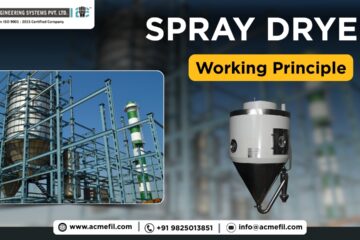
Did you know that the process of spray drying can transform liquid materials into fine powders in just 10-30 seconds? This revolutionary technique has become the backbone of modern manufacturing, from the instant coffee you drink every morning to the pharmaceutical medications that save lives. Whether you’re a food technologist, pharmaceutical researcher, or industrial engineer, understanding spray drying fundamentals can unlock new possibilities for your products and processes.
The process of spray drying represents one of the most efficient and versatile methods for converting liquid feeds into dry powder products. This comprehensive guide will walk you through every aspect of spray drying, from basic principles to advanced applications, ensuring you gain the expertise needed to implement or optimize this technology in your field.
Table of Contents
What Is the Process of Spray Drying?
The process of spray drying is a continuous unit operation that transforms liquid or slurry materials into dry particulate products through rapid moisture evaporation. This technique involves atomizing the liquid feed into fine droplets within a heated chamber, where hot air rapidly removes moisture, leaving behind solid particles.
Spray drying operates on the principle of creating maximum surface area contact between the liquid feed and hot drying gas. The atomized droplets, typically ranging from 10 to 200 micrometers in diameter, undergo rapid heat and mass transfer, resulting in almost instantaneous drying.
The beauty of spray drying lies in its ability to produce uniform, free-flowing powders with controlled particle size distribution, moisture content, and bulk density. This makes it invaluable across numerous industries where consistent powder properties are crucial for product quality and functionality.
Key Components of Spray Drying Systems
Every spray drying system consists of four essential components that work together to achieve efficient liquid-to-powder transformation:
Feed System: This component handles the liquid or slurry preparation and delivery to the atomizer. It typically includes tanks, pumps, filters, and flow control mechanisms that ensure consistent feed properties and flow rates.
Atomization System: The heart of spray drying, this system breaks the liquid feed into fine droplets. Common atomizer types include rotary atomizers, pressure nozzles, and two-fluid nozzles, each offering different advantages for specific applications.
Drying Chamber: This large vessel provides the space where droplet formation, drying, and particle formation occur. The chamber design significantly impacts residence time, heat transfer efficiency, and final product characteristics.
Product Recovery System: This system separates the dried powder from the exhaust air stream using cyclones, bag filters, or electrostatic precipitators, ensuring maximum product recovery and minimal environmental impact.
The Science Behind Spray Drying Process
Understanding the scientific principles governing spray drying helps optimize process parameters and troubleshoot common issues. The process involves complex heat and mass transfer phenomena occurring simultaneously within microseconds.
Heat Transfer Mechanisms
During spray drying, three primary heat transfer mechanisms operate simultaneously. Convective heat transfer occurs as hot air contacts the droplet surfaces, providing the energy necessary for moisture evaporation. Conductive heat transfer happens within the droplet as heat moves from the surface toward the center. Radiative heat transfer, though less significant, contributes to the overall thermal energy available for drying.
The rate of heat transfer directly influences drying kinetics and final product quality. Higher heat transfer rates accelerate moisture removal but may cause thermal degradation of heat-sensitive materials. Conversely, insufficient heat transfer results in incomplete drying and potential product quality issues.
Mass Transfer Dynamics
Mass transfer in spray drying involves moisture movement from the droplet interior to the surface, followed by evaporation into the surrounding gas phase. This process occurs in distinct phases, each with unique characteristics and controlling factors.
The initial drying phase features constant-rate moisture removal, where surface moisture evaporates rapidly. During this phase, droplet temperature remains relatively constant at the wet-bulb temperature of the drying air. The falling-rate period follows, characterized by decreasing moisture removal rates as internal moisture migration becomes the limiting factor.
Understanding these mass transfer dynamics enables process engineers to optimize operating conditions for specific materials and desired product characteristics. Factors such as inlet temperature, air velocity, and residence time significantly impact mass transfer efficiency and final product quality.
Step-by-Step Process of Spray Drying
The spray drying process follows a systematic sequence of operations, each critical for achieving optimal results. Let me walk you through each step in detail.
Step 1: Feed Preparation and Conditioning
Feed preparation represents the foundation of successful spray drying operations. The liquid feed must possess appropriate properties for effective atomization and drying. This involves adjusting solids content, viscosity, and temperature to optimize processability.
Solids concentration typically ranges from 10% to 60% by weight, depending on the material properties and desired final product characteristics. Higher solids concentrations improve thermal efficiency but may increase viscosity beyond acceptable limits for proper atomization.
Temperature conditioning ensures optimal feed viscosity and prevents thermal shock during atomization. Many feeds require preheating to reduce viscosity and improve atomization quality. However, temperature-sensitive materials may require cooling to prevent degradation.
Step 2: Atomization and Droplet Formation
Atomization transforms the conditioned feed into fine droplets, creating the large surface area necessary for rapid drying. The atomization quality directly impacts final product characteristics, including particle size distribution, moisture content, and bulk density.
Rotary atomizers use centrifugal force to break liquid feeds into droplets. These devices offer excellent control over particle size and distribution, making them ideal for applications requiring uniform products. Operating speeds typically range from 5,000 to 50,000 RPM, with higher speeds producing finer particles.
Pressure nozzles utilize hydraulic energy to achieve atomization. High-pressure pumps force the feed through specially designed nozzles, creating fine sprays. These systems work well for low-viscosity feeds and offer simple operation and maintenance.
Two-fluid nozzles employ compressed air or steam to atomize the liquid feed. This method provides excellent atomization quality for high-viscosity feeds and offers precise control over droplet size distribution through air-to-liquid ratio adjustment.
Step 3: Drying Chamber Operations
The drying chamber serves as the reaction vessel where droplet drying and particle formation occur. Chamber design significantly influences residence time distribution, heat transfer efficiency, and product recovery rates.
Co-current flow configuration introduces both hot air and atomized feed at the chamber top, allowing them to flow in the same direction. This arrangement provides gentle drying conditions suitable for heat-sensitive materials but may result in longer residence times.
Counter-current flow brings hot air from the bottom while feed enters from the top. This configuration offers higher thermal efficiency and shorter residence times but may expose products to higher temperatures, potentially causing thermal degradation.
Mixed-flow designs combine elements of both co-current and counter-current arrangements, offering balanced performance characteristics. These systems provide good thermal efficiency while maintaining relatively gentle drying conditions.
Step 4: Product Recovery and Collection
Product recovery systems separate dried particles from the exhaust air stream, ensuring maximum yield and minimal product loss. Multiple separation techniques often work together to achieve optimal recovery rates.
Primary separation typically occurs within the drying chamber itself, where larger particles settle due to gravity. Chamber design features such as conical bottoms and smooth walls facilitate particle collection and discharge.
Secondary separation employs cyclones to remove fine particles from the exhaust air stream. These devices use centrifugal force to separate particles based on size and density differences. Multiple cyclones in series improve separation efficiency for very fine particles.
Tertiary separation utilizes bag filters or electrostatic precipitators to capture remaining fine particles. These systems achieve very high collection efficiencies but require careful maintenance to prevent product contamination and ensure consistent performance.
Types of Spray Drying Systems
Different spray drying configurations serve various industry needs and material requirements. Understanding these system types helps select the most appropriate technology for specific applications.
Open-Cycle Spray Dryers
Open-cycle systems draw fresh air from the atmosphere, heat it, and discharge it after drying. These systems offer simple operation and lower capital costs but may have higher operating expenses due to continuous air heating requirements.
Open-cycle dryers work well for non-volatile materials and applications where solvent recovery is unnecessary. They provide excellent flexibility for varying production requirements and easy maintenance access.
Closed-Cycle Spray Dryers
Closed-cycle spray dryer systems recirculate the drying gas, offering several advantages for specific applications. These systems excel when processing organic solvents, volatile materials, or when environmental regulations require emission control.
Solvent recovery becomes economically attractive with closed-cycle systems, especially for high-value solvents. The recirculation capability also provides better control over drying conditions and reduces environmental impact.
Semi-Closed Systems
Semi-closed systems combine elements of both open and closed-cycle configurations. These systems recirculate a portion of the exhaust gas while introducing fresh air to maintain optimal drying conditions.
This configuration offers improved thermal efficiency compared to open-cycle systems while maintaining operational flexibility. Semi-closed systems work particularly well for applications requiring moderate solvent recovery or emission control.
Critical Process Parameters in Spray Drying
Successful spray drying operations depend on careful control of multiple process parameters. Understanding these variables and their interactions enables optimization for specific products and applications.
Inlet Air Temperature
Inlet air temperature represents the primary driving force for moisture evaporation. Higher temperatures increase drying rates and thermal efficiency but may cause thermal degradation of heat-sensitive materials.
Typical inlet temperatures range from 150°C to 220°C for most food applications, while pharmaceutical and chemical applications may require different temperature ranges based on material properties and stability requirements.
Temperature selection must balance drying efficiency with product quality considerations. Heat-sensitive materials often require lower inlet temperatures with longer residence times to achieve adequate drying.
Outlet Air Temperature
Outlet air temperature indicates the thermal energy remaining in the exhaust gas and correlates with product moisture content. Lower outlet temperatures generally result in higher thermal efficiency but may indicate incomplete drying.
Optimal outlet temperatures typically range from 70°C to 90°C for most applications. Higher outlet temperatures suggest insufficient heat utilization, while lower temperatures may indicate over-drying or potential condensation issues.
Controlling outlet temperature through feed rate adjustment provides an effective method for maintaining consistent product quality while optimizing energy utilization.
Air Flow Rate and Velocity
Air flow rate determines residence time and heat transfer rates within the drying chamber. Higher flow rates reduce residence time but increase heat transfer coefficients, potentially improving drying efficiency.
Optimal air velocities typically range from 0.5 to 2.0 meters per second within the drying chamber. Higher velocities may cause excessive product entrainment, while lower velocities result in insufficient heat transfer.
Air flow distribution significantly impacts drying uniformity and product quality. Proper air inlet design ensures even distribution and prevents dead zones that could cause incomplete drying or product degradation.
Feed Rate and Concentration
Feed rate directly influences residence time and thermal load on the drying system. Higher feed rates reduce residence time but increase the moisture load requiring removal.
Optimal feed rates depend on chamber size, air flow rate, and material properties. Excessive feed rates may result in incomplete drying, while insufficient rates waste energy and reduce production capacity.
Feed concentration affects both drying kinetics and final product characteristics. Higher concentrations improve thermal efficiency but may increase atomization difficulty and affect particle formation.
Atomization Technologies in Spray Drying
Atomization technology selection significantly impacts spray drying performance and final product quality. Each atomization method offers unique advantages and limitations for different applications.
Rotary Atomizers
Rotary atomizers use centrifugal force to create fine droplets from liquid feeds. These devices consist of a rotating disk, bowl, or wheel that spreads the liquid into thin films before breaking into droplets.
The primary advantage of rotary atomizers lies in their ability to handle high feed rates while maintaining excellent particle size control. Disk speeds typically range from 5,000 to 50,000 RPM, with higher speeds producing finer particles.
Rotary atomizers excel for applications requiring uniform particle size distribution and high production rates. They handle viscous feeds better than pressure nozzles and offer good flexibility for varying feed properties.
Pressure Nozzles
Pressure nozzles utilize hydraulic energy to achieve atomization through specially designed orifices. High-pressure pumps force the liquid feed through the nozzle, creating fine sprays with controlled droplet size distribution.
Single-fluid pressure nozzles offer simple operation and maintenance while providing good atomization quality for low-viscosity feeds. Operating pressures typically range from 10 to 100 bar, depending on the desired droplet size and feed properties.
These systems work well for applications requiring simple operation and moderate production rates. They provide excellent reliability and relatively low capital costs compared to other atomization methods.
Two-Fluid Nozzles
Two-fluid nozzles employ compressed air or steam to atomize liquid feeds. These systems mix the liquid feed with the atomizing gas either internally or externally to create fine droplets.
Internal mixing nozzles combine the liquid and gas streams within the nozzle body before discharge. This configuration provides intimate mixing and excellent atomization quality but may be prone to clogging with high-viscosity feeds.
External mixing nozzles keep the liquid and gas streams separate until discharge. This design offers easier maintenance and better handling of viscous or particle-containing feeds while maintaining good atomization quality.
Applications of Spray Drying Across Industries
The versatility of spray drying makes it invaluable across numerous industries, each with specific requirements and challenges. Understanding these applications helps appreciate the technology’s broad impact.
Food and Beverage Industry
The food industry represents the largest application area for spray drying technology. Instant coffee production relies heavily on spray drying to create soluble coffee powders with controlled particle size and moisture content.
Dairy product manufacturing utilizes spray drying for milk powder, whey protein, and cheese powder production. The gentle drying conditions preserve nutritional value while extending shelf life and improving handling characteristics.
Fruit juice powder production through spray drying enables long-term storage and transportation of seasonal products. Encapsulation techniques during spray drying protect sensitive compounds and enhance product stability.
Pharmaceutical Industry
Pharmaceutical applications demand exceptional product quality and process control. Spray drying enables the production of inhalable drug powders with precise particle size distributions for optimal lung deposition.
Protein drug formulation benefits from spray drying’s gentle processing conditions. The rapid drying minimizes protein denaturation while creating stable, easily reconstitutable powders for injection or oral administration.
Controlled-release drug delivery systems utilize spray drying to create microparticles with specific release profiles. Encapsulation during drying protects active ingredients and enables targeted drug delivery.
Chemical and Materials Industry
Chemical manufacturing employs spray drying for catalyst production, creating high-surface-area powders with controlled porosity and activity. The uniform particle size distribution ensures consistent catalytic performance.
Ceramic powder production through spray drying enables precise control over particle characteristics crucial for high-performance applications. The process creates free-flowing powders with excellent sintering properties.
Pigment and dye manufacturing utilizes spray drying to create stable, dispersible powders with controlled color properties. The rapid drying preserves color intensity while improving handling characteristics.
Advantages and Limitations of Spray Drying
Understanding the advantages and limitations of spray drying helps determine its suitability for specific applications and guides process optimization efforts.
Key Advantages
Spray drying offers numerous advantages that make it the preferred drying method for many applications. The continuous operation enables high production rates and excellent process control, making it ideal for large-scale manufacturing.
Product quality benefits include uniform particle size distribution, controlled moisture content, and good flowability characteristics. The rapid drying preserves heat-sensitive compounds and maintains product functionality.
Operational flexibility allows processing of various feed types, from solutions to suspensions, with adjustable process parameters for different product requirements. The closed-system design provides good hygiene and contamination control.
Energy efficiency, particularly with heat recovery systems, makes spray drying economically attractive for high-volume applications. The direct contact between hot air and product enables efficient heat utilization.
Primary Limitations
Despite its advantages, spray drying has several limitations that must be considered during technology selection. High capital costs for equipment and installation may limit adoption for small-scale applications.
Energy consumption can be significant, particularly for dilute feeds requiring extensive moisture removal. Operating costs may become prohibitive without proper heat recovery systems.
Product losses through fine particle entrainment can reduce overall yield and increase operating costs. Effective product recovery systems are essential for economic operation.
Thermal degradation of heat-sensitive materials may occur despite rapid drying, requiring careful temperature control and potentially limiting application scope.
Troubleshooting Common Spray Drying Issues
Successful spray drying operations require understanding common problems and their solutions. Systematic troubleshooting approaches help maintain consistent product quality and optimal system performance.
Particle Size Control Problems
Particle size variations often result from inconsistent atomization conditions or changing feed properties. Monitoring atomizer performance and feed characteristics helps identify and correct these issues.
Rotary atomizer speed variations cause particle size fluctuations. Regular speed monitoring and adjustment maintain consistent atomization quality. Worn atomizer components require replacement to restore proper performance.
Feed viscosity changes affect atomization quality and particle formation. Temperature control and solids concentration monitoring help maintain consistent feed properties for optimal atomization.
Moisture Content Issues
Incomplete drying typically results from insufficient residence time, inadequate heat transfer, or excessive feed rates. Systematic evaluation of these factors helps identify root causes.
Outlet air temperature monitoring provides early indication of drying performance changes. Adjusting feed rates or inlet temperatures can restore proper drying conditions.
Product moisture content analysis helps verify drying effectiveness and guide process optimization. Regular testing ensures consistent product quality and shelf stability.
Powder Flow and Handling Problems
Poor powder flowability often results from excessive moisture content, particle size distribution issues, or electrostatic buildup. Identifying the root cause guides appropriate corrective actions.
Moisture content optimization through process parameter adjustment improves powder flow characteristics. Proper storage and handling conditions prevent moisture reabsorption.
Particle size distribution control through atomization optimization ensures good flow properties. Regular particle size analysis helps maintain consistent product characteristics.
Optimization Strategies for Spray Drying Operations
Optimizing spray drying operations requires systematic evaluation of process parameters and their interactions. Understanding these relationships enables improved product quality and operational efficiency.
Energy Efficiency Improvements
Heat recovery systems significantly improve energy efficiency by utilizing exhaust air thermal energy for air preheating or other plant operations. Properly designed heat exchangers can recover 30-60% of the input thermal energy.
Insulation upgrades reduce heat losses and improve thermal efficiency. High-quality insulation materials and proper installation techniques minimize energy waste and improve process economics.
Process parameter optimization balances product quality requirements with energy consumption. Systematic evaluation of temperature, flow rates, and residence times identifies optimal operating conditions.
Product Quality Enhancement
Atomization optimization ensures consistent particle size distribution and product characteristics. Regular atomizer maintenance and proper operating parameter selection maintain product quality.
Process control system implementation enables real-time monitoring and adjustment of critical parameters. Advanced control strategies maintain consistent product quality despite feed variation.
Quality assurance programs with regular testing and analysis ensure product consistency and customer satisfaction. Statistical process control techniques help identify trends and prevent quality issues.
Maintenance and Reliability
Preventive maintenance programs reduce unplanned downtime and maintain consistent performance. Regular inspection and component replacement prevent costly failures and production interruptions.
Cleaning procedures maintain hygiene standards and prevent product contamination. Proper cleaning protocols and validation ensure food safety and regulatory compliance.
Spare parts inventory management ensures quick response to equipment failures. Critical component identification and strategic inventory planning minimize downtime impact.
Future Trends and Innovations in Spray Drying
The spray drying industry continues evolving with new technologies and applications. Understanding these trends helps prepare for future developments and opportunities.
Advanced Process Control
Artificial intelligence and machine learning applications enable predictive process control and optimization. These technologies analyze large datasets to identify patterns and optimize operations automatically.
Real-time process monitoring with advanced sensors provides immediate feedback on product quality and process performance. Inline particle size analyzers and moisture meters enable continuous quality control.
Digital twin technology creates virtual process models for optimization and troubleshooting. These models help predict process behavior and optimize operations without costly physical trials.
Sustainable Processing Technologies
Green chemistry principles drive the development of more sustainable spray drying processes. Solvent-free formulations and renewable energy integration reduce environmental impact.
Waste heat recovery systems become more sophisticated, capturing and utilizing thermal energy from multiple sources. These systems improve overall plant efficiency and reduce operating costs.
Water recycling technologies enable closed-loop water systems, reducing environmental impact and operating costs. Advanced filtration and treatment systems ensure water quality for process use.
Novel Applications
Nanotechnology applications utilize spray drying for nanoparticle production and encapsulation. These applications require precise control over particle formation and characteristics.
Biotechnology applications expand with increased protein drug development and manufacturing. Spray drying provides gentle processing conditions suitable for sensitive biological materials.
Advanced materials production through spray drying enables new functional materials with controlled properties. These applications require understanding of complex particle formation mechanisms.
Frequently Asked Questions About Spray Drying
What is the typical residence time in spray drying?
Residence time in spray drying typically ranges from 10 to 30 seconds, depending on chamber size, air flow rate, and particle size. This rapid processing minimizes thermal exposure and preserves product quality.
How does spray drying compare to other drying methods?
Spray drying offers advantages in continuous operation, uniform product quality, and handling of heat-sensitive materials compared to tray drying or drum drying. However, it requires higher capital investment and energy consumption.
What factors determine particle size in spray drying?
Particle size depends primarily on atomization conditions, including atomizer type, operating parameters, and feed properties. Secondary factors include drying conditions and feed concentration.
Can spray drying handle high-viscosity feeds?
Yes, spray drying can handle viscous feeds, particularly with rotary atomizers or two-fluid nozzles. Feed preheating or dilution may be necessary for very viscous materials.
What are the energy requirements for spray drying?
Energy consumption typically ranges from 1.5 to 3.0 kWh per kilogram of water evaporated, depending on feed concentration, system efficiency, and heat recovery implementation.
Conclusion
The process of spray drying represents a sophisticated yet practical solution for transforming liquid materials into high-quality powder products. From its fundamental principles of atomization and rapid moisture removal to its diverse applications across industries, spray drying continues to prove its value as an essential manufacturing technology.
Understanding the intricate balance between heat and mass transfer, the critical role of process parameters, and the various system configurations enables the successful implementation and optimization of spray drying operations. Whether you’re developing new products, improving existing processes, or troubleshooting operational challenges, the comprehensive knowledge presented in this guide provides the foundation for success.
The future of spray drying looks promising with advancing technologies in process control, sustainability, and novel applications. As industries continue demanding higher quality standards and more efficient processes, the process of spray drying will undoubtedly evolve to meet these challenges while maintaining its position as a cornerstone of modern manufacturing.
Ready to implement spray drying in your operations or optimize your existing processes? Start by evaluating your specific requirements against the guidelines presented here, and consider consulting with spray drying specialists to ensure optimal results for your unique application.